

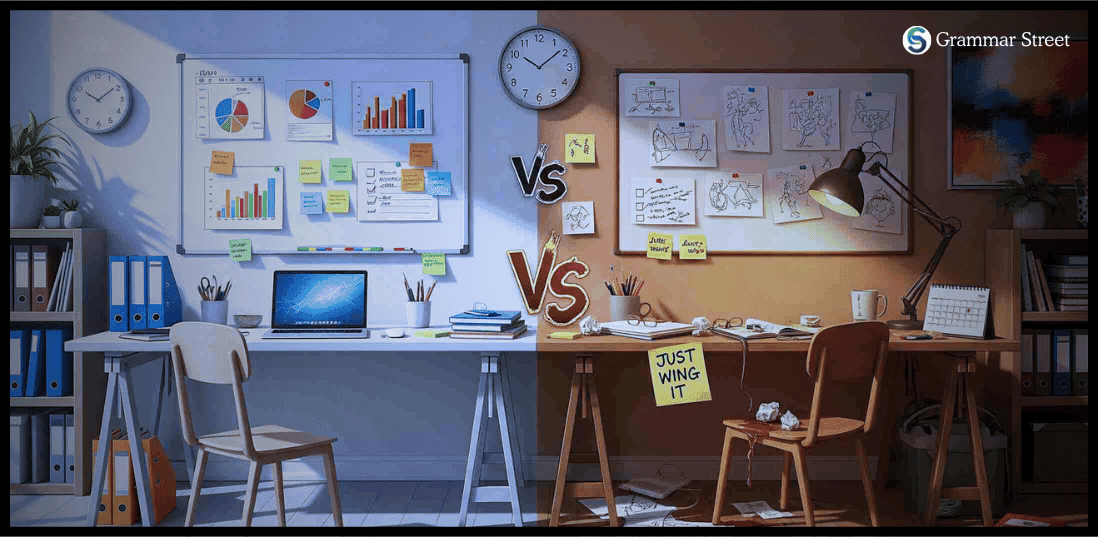
Hey there! Have you ever wondered what the opposite of being systematic is? Maybe you're trying to understand how some processes or behaviors deviate from organized methods. Knowing this can help you communicate more clearly, improve your writing, and even sharpen your understanding of different personality traits and behaviors. Today, I’ll dive deep into what “opposite of systematic” really means, how to recognize it, and why understanding this concept is so important.
In this comprehensive guide, I’ll cover everything from definitions and key traits to common mistakes, variations, and practical exercises—so let’s get started!
What is the Opposite of Systematic?
Let's kick things off with a simple question: What does "systematic" mean? If you've heard someone say they’re systematic, it generally implies they’re methodical, organized, and thorough. But what happens when someone isn't like that? That’s where the opposite of systematic comes into play.
Definition:
The opposite of systematic refers to a manner or behavior characterized by a lack of organization, planning, or consistency. These actions are often spontaneous, unpredictable, and sometimes careless.
Common synonyms:
- Spontaneous
- Unstructured
- Impulsive
- Disorderly
- Haphazard
- Careless
- Erratic
- Unmethodical
Why it matters:
Understanding this contrast helps you recognize different behaviors and improve your communication, whether in personal life, academics, or professional settings.
Deep Dive: Understanding the Opposite of Systematic
Imagine you're organizing a project. Being systematic means planning steps carefully, following a schedule, and double-checking your work. Now, think of a scenario where things are done on a whim, without thought, or just randomly. That’s the opposite—spontaneous or unstructured.
Let’s explore this from various angles:
| Aspect | Systematic | Opposite (Spontaneous/Unstructured) |
|---|---|---|
| Approach | Planned, organized, methodical | Random, impulsive, unpredictable |
| Time management | Timely, scheduled | Often chaotic, delayed or skipped |
| Decision-making | Rational, analyzed | Quick, instinctive |
| Consistency | High | Low or inconsistent |
| Outcome | Reliable and predictable | Uncertain, varied |
15 Categories Reflecting the Opposite of Systematic
To give you a clearer picture, here are 15 different categories or traits that often embody the opposite of being systematic:
| Category | Description | Example Sentence |
|---|---|---|
| Personality trait | Impulsive, spontaneous | "She made her decisions spontaneously, without planning." |
| Physical description | Unkempt, messy | "His room was cluttered and unorganized." |
| Role | Daredevil, risk-taker | "He loves taking haphazard risks." |
| Behavior | Careless, reckless | "Her careless driving alarmed everyone." |
| Decision style | Gut-feeling, unplanned | "The team improvised based on instinct." |
| Work ethic | Disorganized, chaotic | "His work style is quite unmethodical." |
| Communication | Erratic, inconsistent | "Her messages were all over the place." |
| Creativity | Spontaneous, improvisational | "The musician improvised during the concert." |
| Planning | Nonexistent, ad-hoc | "They approached the project in a haphazard manner." |
| Time management | Irregular, unpredictable | "He often starts tasks at the last minute." |
| Emotional state | Impulsive, reactive | "She responds emotionally rather than thoughtfully." |
| Physical environment | Cluttered | "Her desk was cluttered and disorganized." |
| Approach to problem-solving | Reactive, improvisational | "They relied on guesswork instead of analysis." |
| Attitude | Carefree, nonchalant | "He took a laid-back, unstructured approach." |
| Process | Random, inconsistent | "The process lacked any clear method." |
Proper Usage and Examples
Let’s see how to correctly use words that embody the opposite of systematic in sentences:
Example Sentences:
- She approached her project in a spontaneous manner, often skipping planned phases.
- His work was so unorganized that deadlines became impossible to meet.
- The team’s haphazard planning resulted in many missed opportunities.
- He relies on intuition, often making impulsive decisions without analysis.
- Her unstructured method of teaching confused the students.
Proper Order When Using Multiple Terms
Imagine combining traits or actions. Here’s how to keep it clear:
- Correct: He was impulsive, reckless, and unmethodical in his approach.
- Incorrect: He was unmethodical, impulsive, reckless in his approach. (The flow is less smooth)
Tip: Keep related traits grouped logically for better clarity.
Different Forms with Examples
Understanding variations helps you to communicate precisely:
| Form | Example Sentence | Notes |
|---|---|---|
| Adjective | Spontaneous decision | Describes a noun |
| Adverb | He decided spontaneously. | Describes an action |
| Noun | His impulsiveness often leads to chaos. | The trait or behavior |
| Verb | She tends to act impulsively. | The action |
Practice Exercises
Let's sharpen your understanding with some exercises.
1. Fill-in-the-Blank
Fill in the blank with the correct opposite of systematic:
a) His approach was so __________ that nothing was properly planned.
b) The team handled the project __________, improvising as they went along.
c) Her work is __________, often resulting in missed deadlines.
2. Error Correction
Identify and correct the mistake:
"The haphazardly arranged files made it hard to find anything."
3. Identification
Identify whether the sentence describes a systematic or opposite approach:
a) She planned every detail ahead of time.
b) He often makes decisions on impulse.
4. Sentence Construction
Create a sentence using the word "erratic" referring to behavior.
5. Category Matching
Match the trait to the correct description:
- Impulsive | Tends to act quickly based on feelings.
- Organized | Plans everything carefully.
Tips for Success in Recognizing and Using the Opposite of Systematic
- Look for clues in context—words like "spontaneous," "careless," "chaotic."
- Practice by contrasting systematic vs. non-systematic behaviors in real-life scenarios.
- Don’t overuse negative traits; balance awareness with positive traits when needed.
Common Mistakes to Avoid
- Confusing impulsiveness with recklessness—be specific.
- Using the wrong form of the word (e.g., "impulsively" instead of "impulsive").
- Mixing unrelated traits without logical flow.
- Overgeneralizing—remember, even spontaneous behavior can be strategic in some contexts.
Variations and Similar Terms
Here are some related concepts you might encounter or want to use:
- Impulsive: Acting quickly without thinking.
- Haphazard: Lacking any obvious principle or organization.
- Unstructured: Without a clear plan or framework.
- Erratic: Frequently changing or unpredictable.
- Disorganized: Lacking order or method.
Why Is Understanding This Important?
Grasping the opposite of systematic empowers you to describe a variety of behaviors, personalities, and approaches accurately. Whether you're editing a paper, giving feedback, or simply understanding others better, recognizing these traits enhances communication and clarity.
Summary: Embrace the Spontaneous, Not Just the Systematic
In this guide, we’ve explored the many facets of the opposite of systematic. From understanding its traits, recognizing different categories, to practicing with real sentences and exercises, you now have a comprehensive toolkit.
Remember, not every situation calls for meticulous planning. Sometimes, spontaneity or chaos brings unique opportunities. Recognizing when behaviors are not systematic helps you adapt, communicate better, and appreciate the complexity of human approaches.
Action Point: Next time you hear someone describing a chaotic process or an impulsive decision, analyze whether it’s the opposite of systematic. Use the vocabulary and tips from this guide to articulate it clearly.
Thanks for sticking with me through this deep dive! Whether you're writing, analyzing, or just curious, knowing the contrast between systematic and its opposite opens up new levels of understanding in both language and behavior. Keep exploring, and stay curious!
Remember, understanding the full spectrum—from organized to spontaneous—enhances your communication skills and broadens your perspective. Happy learning!
