

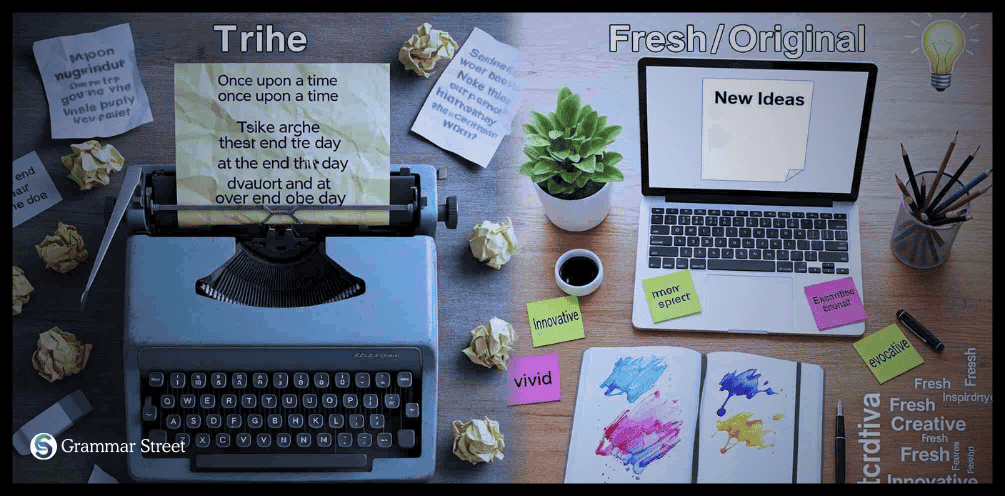
Have you ever read a phrase that just felt overused or * cliched*? Maybe it sounded nice the first time, but now it feels dull and uninspired. That’s where understanding the opposite of trite becomes important. Whether you're a student, writer, or professional communicator, knowing how to express ideas in fresh, engaging ways can make your language stand out. Today, we're diving deep into what makes language not trite, exploring countless ways to elevate your vocabulary, and helping you craft messages that truly resonate.
Let's get started!
What is the Opposite of Trite?
Trite refers to something that’s overused, dull, and lacking originality — like a worn-out phrase or a tired idea. So, what’s the opposite? It’s words, expressions, or ideas that are original, fresh, innovative, and meaningful. Think of it as replacing clichés with impactful, novel expressions that grab attention and convey your message uniquely.
Why is Understanding the Opposite of Trite Important?
In our daily conversations, writing, and professional communications, freshness counts. Using fresh language:
- Keeps your audience engaged
- Demonstrates creativity and originality
- Ensures your message stands out
- Enhances your credibility as an articulate communicator
Now, let's explore the specific qualities that embody the opposite of trite.
Features of Language That Are Not Trite
To craft fresh, lively language, focus on these key characteristics:
| Feature | Description | Examples |
|---|---|---|
| Originality | Unique expressions that haven't been overused | “Innovative idea” vs. “Revolutionary plan” |
| Specificity | Clear, detailed descriptions | “Sunrise over the mountains” vs. “Beautiful morning” |
| Creativity | Invented or imaginative phrasing | “Dancing shadows” instead of “Shadows moving” |
| Precision | Accurate, meaningful words | “Meticulous” instead of “Careful” |
| Authenticity | Genuine, honest expression | “Truthfully, I believe…” |
15 Categories of Opposite (Non-Trite) Expressions
To help you deepen your understanding, here are 15 categories showcasing impactful, non-trite expressions and traits:
Personality Traits
Authentic, genuine, dynamic, resilient, introspective
Example: “She approaches challenges with resilience and an innovative spirit.”Physical Descriptions
Vivid, distinctive, detailed, vibrant, textured
Example: “His eyes shimmered like emeralds beneath the sun.”Roles and Professions
Pioneering, visionary, compassionate, relentless
Example: “A visionary leader who inspires change.”Emotions & Feelings
Profound, euphoric, contemplative, empathetic
Example: “A profound sense of wonder filled the room.”Actions & Behaviors
Innovative, deliberate, compassionate, bold
Example: “She navigated the problem with bold creativity.”Objects & Tools
Sleek, intricate, robust, artisanal
Example: “A sleek, modern design with intricate details.”Nature & Environment
Majestic, tranquil, vibrant, austere
Example: “The tranquil lake reflected the crimson sky at dusk.”Ideas & Concepts
Original, groundbreaking, insightful, nuanced
Example: “Her insightful analysis offered a new perspective.”Time & Era
Timeless, revolutionary, ephemeral, classic
Example: “A timeless piece that transcends eras.”Settings & Locations
Picturesque, bustling, serene, mysterious
Example: “The picturesque village nestled between rolling hills.”Food & Taste
Delectable, fragrant, savory, tangy
Example: “A savory dish bursting with flavor.”Fashion & Style
Elegant, avant-garde, minimalist, ornate
Example: “Her minimalist style speaks volumes about her personality.”Music & Art
Soulful, innovative, evocative, vibrant
Example: “The artwork is vibrant and emotionally evocative.”States & Conditions
Robust, flourishing, resilient, thriving
Example: “The resilient community rebuilt after the storm.”Abstract & Philosophical Ideas
Existential, transcendent, profound, enlightening
Example: “His thoughts offered a transcendent view of life.”
Proper Usage and Sentence Construction of Non-Trite Expressions
When using these impactful words, order matters to ensure clarity and impact. Here’s a quick guide:
- Adjective + Noun: “A resilient community,” “An innovative approach”
- Adverb + Verb: “She thoughtfully considered the options”
- Verb + Object: “He crafted an intricate plan”
- Multiple descriptors: “A vibrant, soulful melody that touched everyone”
Examples:
- Instead of “He’s a caring person,” try “He exhibits genuine compassion and resilience.”
- Instead of “The view was nice,” use “The picturesque landscape took my breath away.”
Variations of Expression
To keep your language engaging, explore synonyms and related phrases:
| Word | Synonyms | Usage Example |
|---|---|---|
| Innovative | Creative, novel, groundbreaking | “Her innovative ideas revolutionized the project.” |
| Authentic | Genuine, sincere, real | “He offered a sincere apology.” |
| Vibrant | Lively, bright, energetic | “The vibrant colors brought the painting to life.” |
| Detailed | Descriptive, comprehensive, elaborate | “Her detailed report covered every aspect.” |
Tips for Success in Using Non-Trite Language
- Read widely and diversely — absorb fresh language from various sources.
- Practice writing with synonyms and vivid descriptions.
- Avoid clichés; instead, craft original metaphors or imagery.
- Use a thesaurus cautiously — ensure the word fits the context.
- Edit ruthlessly to replace dull or overused phrases.
Common Mistakes to Avoid & How to Fix Them
| Mistake | How to Avoid | Example Fix |
|---|---|---|
| Overusing clichés | Expand vocabulary, think creatively | Replace “cold as ice” with “crisp as winter’s first frost” |
| Using vague words | Be specific and descriptive | Swap “good” for “remarkable” or “exceptional” |
| Redundancy | Review and cut unnecessary words | Instead of “absolutely essential,” use “crucial” |
Similar Variations & How to Make the Language Richer
You can deepen your expressions by:
- Combining multiple vivid descriptors (e.g., “a vibrant, bustling marketplace”).
- Creating metaphors or analogies that spark imagination.
- Incorporating sensory details to make descriptions more immersive.
Why Using a Non-Trite Language Matters
In a world saturated with information, being original and fresh is more than aesthetics—it's about clarity, connection, and impact. Mastering the opposite of trite can elevate your writing, making your ideas memorable and your speech compelling.
Practice Exercises: Test Your Skills
Fill-in-the-blank:
Her speech was __________ and genuinely inspiring.
(Answer: authentic, heartfelt)Error Correction:
Replace the trite phrase: “He’s a really nice guy.”
(Ideal answer: “He’s a genuinely compassionate person.”)Identification:
Identify the trite phrase and replace it with a fresh expression:
“Time flies when you’re having fun.”
(Suggested revision: “Joy makes moments seem to pass in an instant.”)Sentence Construction:
Construct a sentence using “vibrant” and “innovative” related to art.
(Example: “The gallery showcased vibrant, innovative pieces that captivated every visitor.”)Category Matching:
Match the word to its category: “Majestic” — a) personality b) scenery c) emotion
(Answer: b) scenery)
Summary & Final Thoughts
In conclusion, moving away from trite language is about embracing originality, specificity, and creativity. It involves expanding your vocabulary, honing your descriptive skills, and expressing ideas in ways that resonate deeply. Whether you're describing a person, a scene, or an abstract concept, selecting fresh, impactful words can transform your communication from mundane to memorable.
So, next time you write or speak, challenge yourself to choose words that are authentic and vivid. Remember, your language reflects your creativity and confidence — so make it count!
Ready to elevate your language? Practice these tips daily, and you'll see your expression blossom with freshness and originality!
