

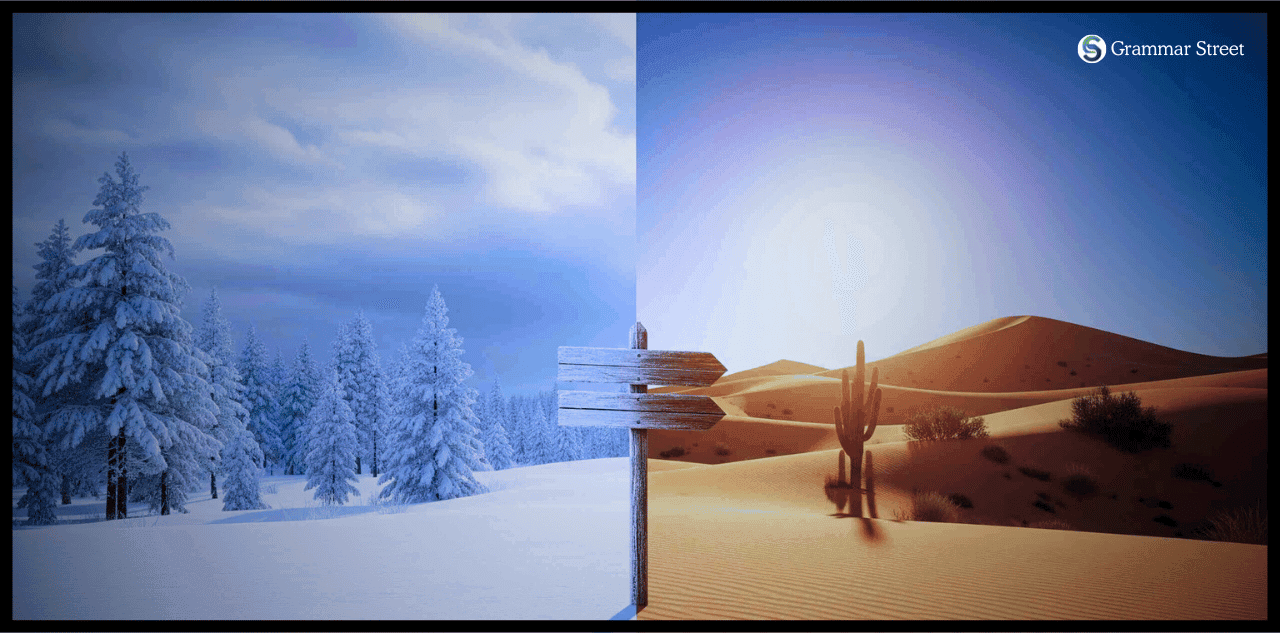
Hey friends! Have you ever stared up at a snowy winter sky and wondered, What’s the opposite of snow? If you’ve thought about it, you’re not alone. Snow is such a distinct part of winter, but in reality, anything that contrasts with it helps us understand it better. Today, I’ll take you on a journey exploring the word "opposite of snow," but more importantly, I’ll help you understand the broader concept behind contrasts—both in nature and language.
Whether you’re a student trying to grasp the basics or a language lover looking to expand your vocabulary, understanding opposites is super useful. So, let’s get started!
What Is the Opposite of Snow?
At its simplest, the opposite of snow refers to anything that directly contrasts with snow’s key qualities. But to make this as clear as possible, let's break down what snow is, what makes it unique, and then explore its opposites.
Understanding Snow: Definition and Characteristics
Snow is a form of frozen precipitation composed of ice crystals. It occurs under specific atmospheric conditions and has distinct physical and symbolic meanings.
| Attribute | Description |
|---|---|
| Physical State | Solid (frozen water) |
| Appearance | White, fluffy, crystalline |
| Temperature Range | Usually below 0°C / 32°F |
| Common Uses | Winter weather, holiday imagery |
Given these points, the opposite of snow would logically be something with these contrasting qualities.
The Opposite of Snow: Key Contrasts
When considering the opposite of snow, think about:
- Physical state
- Color and appearance
- Temperature
- Climate conditions
Let’s explore potential opposites based on these factors.
1. Direct Opposites of Snow
a. Hot and Dry Weather
| Aspect | Opposite of Snow |
|---|---|
| Physical State | N/A (weather condition) |
| Color | N/A |
| Temperature | Hot (above 30°C / 86°F) |
| Climate | Desert, arid conditions |
Example:
"While snow blankets the mountains, the desert sun scorches the sands."
Why Hot and Dry?
Because snow is cold and wet, while hot, dry weather signifies the absence of ice and moisture. It embodies the polar opposite of snow in climate and physical state.
b. Fire or Lava
| Aspect | Opposite of Snow |
|---|---|
| Physical State | Molten (liquid/flowing) |
| Color | Red, orange, or yellow |
| Temperature | Very high (thousands of °C) |
| Appearance | Blazing, dynamic |
Example:
"Where snow is cold and static, lava flows fiercely and hot."
c. Darkness or Night
| Aspect | Opposite of Snow |
|---|---|
| Appearance | Black or dark (night sky) |
| Light Level | No light or very low light |
| Temperature | Can be cool or cold, but contextually contrasting |
Example:
"Snow reflects light, making it bright; darkness absorbs it, creating contrast."
2. Abstract and Symbolic Opposites
Sometimes, the opposite of snow isn’t just physical but symbolic.
| Concept | Opposite |
|---|---|
| Purity | Dirt, mud, or chaos |
| Coldness (emotionally) | Warmth, friendliness |
| Stillness | Movement, chaos |
| Silence | Noise, activity |
Example in Sentences:
“While snow symbolizes purity and calm, mud signifies dirt and chaos.”
3. Categories of the Opposite of Snow
Let’s organize the contrasts into different categories to get a clear perspective.
A. Physical Descriptions
- Hot, dry, lava, sunshine, desert
B. Personality Traits (metaphorically contrasted)
- Cold, distant vs. warm, friendly
C. Roles in Nature
- Frozen (snowpack) vs. flowing (rivers, lava)
D. Colors
- White (snow) vs. Black or Dark
E. Climate Zones
- Temperate and cold regions vs. Tropical or arid regions
4. Using Multiple Terms Together
Sometimes, you might want to combine these to describe more complex contrasts.
Examples:
- Snow vs. a blazing fire
- White snow vs. dark night sky
- Frozen vs. molten lava
Proper Order in Sentences:
"The snow lay untouched, a stark contrast to the fiery volcano erupting nearby."
5. Different Forms of Opposites with Examples
| Form | Example | Explanation |
|---|---|---|
| Noun + Opposite | Snow vs. desert | Direct contrast nouns |
| Adjective + Opposite | Cold vs. hot | Opposing adjectives |
| Verb + Opposite | Freeze vs. melt | Verbs denoting opposing actions |
| Phrase + Opposite | Winter season vs. summer season | Broader categories |
6. Practice Exercises
Let’s sharpen those skills with some quick exercises.
Fill-in-the-Blank
The mountain was covered in ____, while the valley was boiling in ____ heat.
(Answer: snow, hot)The icy lake was frozen solid, but the ____ fire melted everything away.
(Answer: blazing, fire)
Error Correction
Identify and correct the mistake:
"The snow was hot and dry, contrasting with the cold desert."
Corrected: "The snow was cold and white, contrasting with the hot desert."
Identification
What is the opposite of snow in this context?
a) Rain
b) Fire
c) Sunshine
d) Lava
(Correct answer: b) Fire
Sentence Construction
Create a sentence contrasting snow with another element.
7. Tips for Success
- Always consider physical and symbolic qualities when finding opposites.
- Use context clues; for instance, if talking about weather, think temperature and climate.
- Practice combining multiple contrasting terms for richer descriptions.
- Review real-world examples in nature and literature.
8. Common Mistakes and How to Avoid Them
| Mistake | Correction | Explanation |
|---|---|---|
| Assuming only physical contrasts apply | Consider symbolic and contextual contrasts | Snow can be contrasted with emotions or concepts |
| Using vague terms | Use specific adjectives and nouns | E.g., “hot” vs. “cold” instead of “bad” or “good” |
| Mixing unrelated categories | Keep contrasts within same categories | E.g., don’t compare snow with fire, but rather with lava or heat |
9. Similar Variations and Related Topics
- Opposite of Rain: Sun, drought, clear sky
- Opposite of Ice: Boiling water, steam
- Synonyms of Snow: Frost, sleet, hail (but used contextually)
- Antonyms in figurative language: Cold-hearted vs. warm-hearted
10. The Importance of Understanding the Opposite of Snow
Grasping contrasts like the opposite of snow enhances your descriptive writing, helps clarify meanings, and enriches your vocabulary. Whether you're writing stories, essays, or just expanding your language horizons, understanding opposites boosts clarity and adds color to your expression.
11. Final Thoughts
So, next time you think about snow and its opposites, remember—they go beyond just weather. From blazing fire and scorching deserts to dark nights and metaphorical contrasts, exploring opposites enriches your language skills and deepens your appreciation for the natural world. Keep practicing, stay curious, and your understanding of contrasts will only grow stronger.
Stay inspired and keep exploring the fascinating world of language and nature!
And remember, the next time you see snow, think about what truly symbolizes its opposite — and you’ll expand your vocabulary and understanding with ease!
