

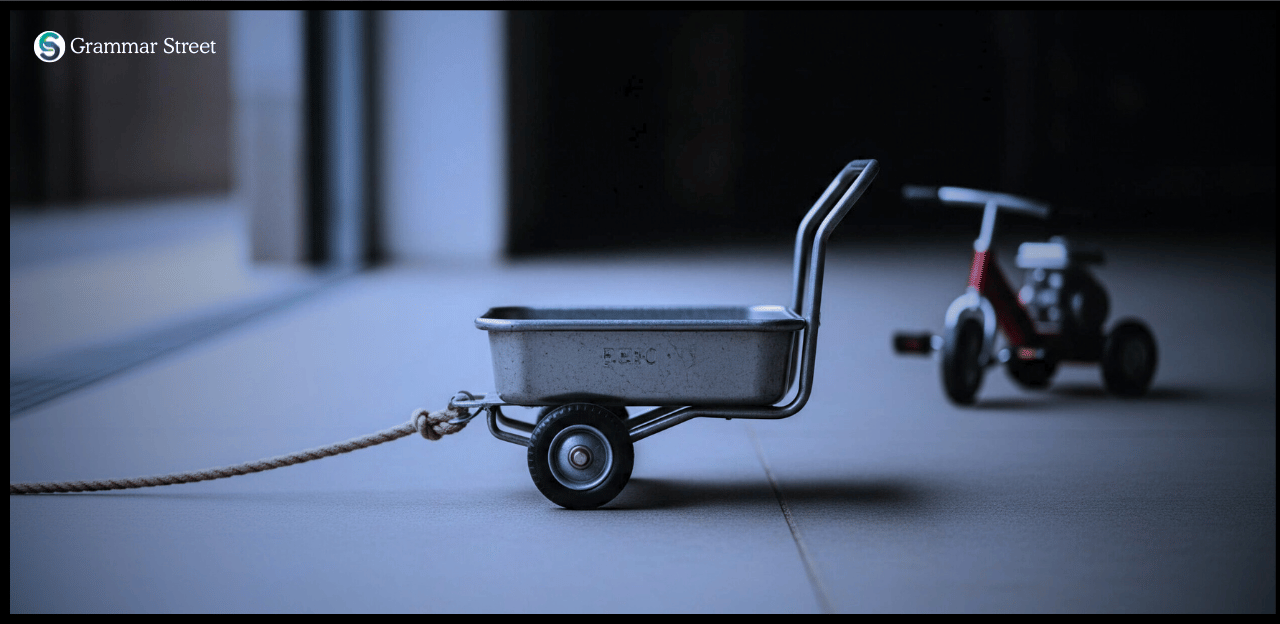
Have you ever wondered what the opposite of self-propelled is? Maybe you're curious about how certain vehicles, devices, or objects move without any internal power — that’s exactly what we'll explore in this guide. Understanding this concept can be surprisingly useful, whether you're a student of English grammar, a curious learner, or someone dealing with technical terms in everyday language.
In this article, I’ll not only identify the opposite of self-propelled but also dive into related terms, practical examples, common mistakes, and useful tips. By the end, you’ll truly grasp the full picture, making your understanding clearer, more detailed, and more applicable.
So, let’s get started!
Contents
- 1 What Is the Opposite of Self-Propelled?
- 2 The Opposite of Self-Propelled: Different Ways to Express It
- 3 In-Depth Look: Categories and Examples
- 4 Proper Usage and Language Tips
- 5 Practice Exercises
- 6 Why Understanding the Opposite of Self-Propelled Matters
- 7 Tips for Success
- 8 Common Mistakes and How to Avoid Them
- 9 Variations and Related Terms
- 10 Why Use This Knowledge?
- 11 Final Summary
What Is the Opposite of Self-Propelled?
When we talk about self-propelled, we're referring to objects or vehicles that can move on their own. Think of a self-propelled lawnmower or a self-driving car. They generate their own power to move.
But what about things that don't generate their own power? That’s where the opposite comes into play. And surprisingly, there isn't a single word that directly opposes self-propelled, but rather a category of terms and phrases.
Defining Key Terms and Concepts
| Term | Definition | Example |
|---|---|---|
| Self-Propelled | Capable of moving independently using internal power sources. | A robot vacuum that moves on its own. |
| Non-Propelled / Towed / Powered externally | Requires external force or power to move. | A boat pulled by a towboat, a wagon pulled by a person. |
The Opposite of Self-Propelled: Different Ways to Express It
1. Towed or Trailed
Towed is often used when something is pulled along by another vehicle or person. For example:
- A boat is towed behind a motorboat.
- A trailer is towed by a truck.
Trailed is similar but often used for animals or objects following something else.
2. Non-Propelled / Non-Motorized
These terms describe objects that cannot move on their own and require external force:
- Non-Propelled
- Non-Motorized
- Manually moved
Examples:
- A non-motorized bicycle (where you pedal to move, not powered by an engine).
- A non-propelled cart (moved by pushing or pulling).
3. Powered by External Force
Objects that are displaced via external force include:
- Pulled
- Dragged
- Pushed
Example sentences:
- The wagon was pulled along by a child.
- The boat was dragged by a tugboat.
In-Depth Look: Categories and Examples
Let's go through 15 different categories where the opposite of self-propelled applies, with real-world examples:
| Category | Opposite / Related Term | Example Sentence |
|---|---|---|
| 1. Vehicles | Towed | The boat was towed to the dock. |
| 2. Animal-powered | Pulled | The carriage was pulled by horses. |
| 3. Human-powered | Carried | The luggage was carried by porters. |
| 4. Mechanical devices | Powered externally | The lawn was mowed by a riding mower (which is self-propelled), but the push mower is manually operated. |
| 5. Marine vessels | Towed | The research vessel was towed by a larger ship. |
| 6. Aircraft | Pulled (via tow) | The airplane was pushed back by a tug. |
| 7. Industrial equipment | Manually adjusted | The scaffolding was moved by workers. |
| 8. Decorations or displays | Carried | The parade floats are pushed or pulled along the route. |
| 9. Construction machinery | Towed | The trailer was towed by a truck. |
| 10. Robots | Remotely controlled | The drone was remotely operated but not self-propelled. |
| 11. Transportation methods | Pedaled | The rickshaw was powered by a human passenger. |
| 12. Small carts | Pulled | The shopping cart was pulled by a customer. |
| 13. Heavy loads | Hauled | The logs were hauled by a tractor. |
| 14. Animal-driven | Led | The cattle were led to the pasture. |
| 15. Art installations | Moved manually | The sculptures were moved by hand during setup. |
Proper Usage and Language Tips
Proper Order When Using Multiple Descriptors
When describing a non-self-propelled object, follow this order:
Object + action + by + agent
- "The boat was towed by a motorboat."
- "The cart was pulled by a horse."
Different Forms with Examples
| Form | Example | Explanation |
|---|---|---|
| Verb (past tense) | The trailer was towed away. | Describes the action as completed. |
| Present participle | The boat is being pulled by the tug. | Describes ongoing action. |
| Noun phrase | It’s a non-propelled vehicle. | Describes the object. |
| Adjective (descriptive) | A towed trailer. | Describes the trailer. |
Practice Exercises
1. Fill-in-the-blank
a) The bicycle was __________ (towed/pushed) by the forklift.
b) The cargo ship was __________ (self-propelled/towed) to the dock.
2. Error Correction
Identify the mistake:
- The car was self-towed to the garage.
- (Corrected): The car was towed to the garage.
3. Identification
What term best fits?
- The tugboat used to move a stranded ship.
(Answer: Towed)
4. Sentence Construction
Create a sentence with the word dragged.
5. Category Matching
Match these items to their category:
| Item | Category |
|---|---|
| A horse pulling a carriage | Animal-driven |
| A boat being pulled by a motorboat | Marine vessels |
| A shopping cart lifted manually | Small carts |
Why Understanding the Opposite of Self-Propelled Matters
Knowing the distinction helps in clearer communication, especially in technical, engineering, or transportation contexts. It also enhances vocabulary, preventing confusion between objects that move themselves and those that are moved by others.
Tips for Success
- Use context clues: The sentence will often tell you if something is self-propelled or not.
- Focus on action words: "Towed," "pulled," "hauled" are common.
- Remember the nuances: Self-propelled emphasizes internal power. Its opposites usually involve external force or human intervention.
- Visualize scenarios: Imagine a skateboard (self-propelled) vs. a skateboard being pushed (non-self-propelled).
- Practice regularly with real-world objects for better retention.
Common Mistakes and How to Avoid Them
-
Confusing terms: Using self-propelled as an opposite when it's actually about internal vs. external power sources.
Avoid: Saying “self-towed” instead of “towed.”
-
Incorrect verb tense: Using past tense incorrectly with passive structures.
Avoid: "The vehicle was self-pulled" — should be "The vehicle was self-propelled," or "The boat was towed."
-
Overgeneralizing: Assuming all objects that aren't self-propelled are the same.
Remember: "Towed" and "pulled" can differ based on context.
Variations and Related Terms
- Self-powered: Emphasizing source of power.
- Remotely operated: Controlled from afar but not moving by itself.
- Manual propulsion: Moving objects by hand or foot.
- Externally assisted: Requires external devices for movement.
Why Use This Knowledge?
Understanding the opposite of self-propelled is essential in multiple fields such as transportation, engineering, robotics, and language learning. It increases clarity, ensures proper communication, and enriches your vocabulary.
Final Summary
To wrap things up: self-propelled objects move on their own, powered internally. Its opposites are generally towed, pulled, dragged, or pushed—objects that require external force to move. Recognizing these distinctions allows for precise, effective communication across many contexts.
And remember, whether you're describing a boat, a toy, or a piece of machinery, knowing these terms makes your language clearer and your descriptions more accurate. Keep practicing, and soon you'll master the art of differentiating between self-movement and external movement.
Thanks for joining me today! Understanding the opposite of self-propelled isn’t just about vocabulary — it’s about making your language more precise and your descriptions more vivid. Happy learning!
